What does “slabbed singles” mean?
What it means
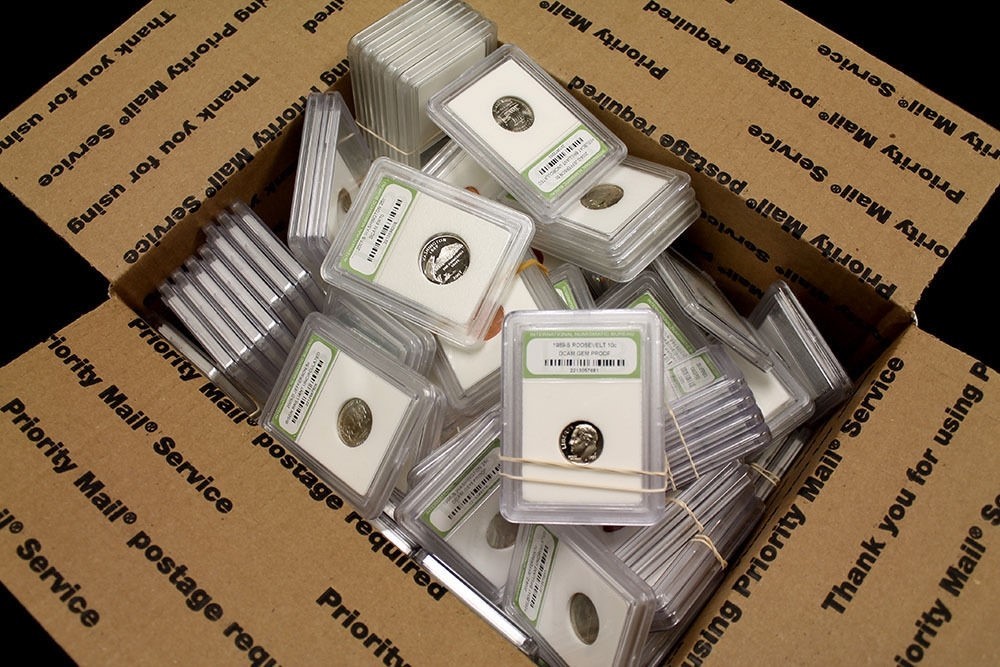
Slabbed singles are individual coins encased in a tamper-evident plastic holder, known as a slab, by a recognized third-party grading service, such as PCGS or NGC. The service evaluates the coin's condition and assigns it a numerical grade (e.g., MS-65, AU-58), simultaneously authenticating it. The mainstream equivalent is a certified, graded coin. The slab acts as a verifiable guarantee of authenticity and precise state of preservation, removing subjective assessment from the buying process.
What it does to price
Grading adds a measurable premium over comparable loose (ungraded) specimens. The multiplier depends heavily on the coin's inherent scarcity and grade level. For common, low-value coins, the premium might be minimal (1.1x to 1.3x). For high-demand, rare coins, the premium can be substantial, often ranging from 3x to 10x the loose market value, especially when the slab guarantees a high grade (e.g., MS-69+). A concrete example: a common 1955 Lincoln Cent might sell loose for \$5, but if graded MS-65, it could easily command \$25 to \$40 due to the guaranteed grade.
How to spot it
The tell is the plastic holder itself. It must bear the official, verifiable markings of the grading company (e.g., NGC certification number, PCGS holder). Examine the seal; it must be intact and show no signs of stress, cracks, or evidence of recent opening. Sellers should provide high-resolution photos clearly showing the grading company's logo, the certification number visible on the slab, and the coin itself within the holder. Common issues include "re-slabbing" (putting a genuine coin into a fake or opened slab) or mis-grading, which requires verification against the official certification number.
Buying smart
Paying the premium is justified when the coin is rare, highly sought after, or when the grade is critical to the coin's value (e.g., a high-grade proof). If the coin is common and the grade is only slightly above average (e.g., MS-62 vs. MS-63), the premium might not justify the added cost and risk of the grading fee. A fair deal involves comparing the slabbed price against recent auction results for the *same coin and the same grade* from reputable sources. If the premium seems excessive without corresponding rarity, the purchase is likely overpriced.
Selling smart
Listing a slabbed single immediately elevates the perceived value. The primary selling advantage is risk mitigation for the buyer. The one word that earns the premium is "Graded" or "Certified." The one photo that seals the deal is a clear, full-view shot of the coin *inside* the slab, ensuring the certification number is legible. Do not rely on the description alone; the visual proof of the official grading company's seal is what commands the highest asking price.
On eBay right now
Current asking prices from live listings — not sold-comp medians.




eBay links are affiliate links: JunkPal may earn a commission at no cost to you.