What does “slabbed assortment” mean?
What it means
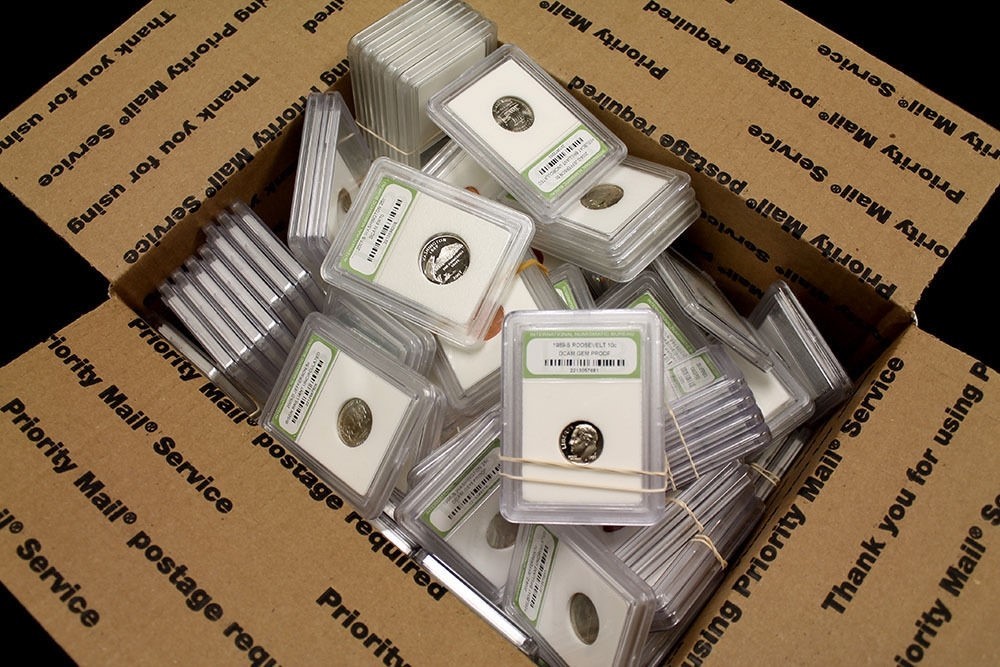
A slabbed assortment is a group of coins where each individual coin has been sealed in a tamper-evident holder by a recognized third-party grading service, such as PCGS or NGC. The holder, or "slab," contains a certification label indicating the coin's authenticity and its assigned grade (e.g., MS-65, AU-58). This process converts subjective condition assessment into an objective, standardized metric. The mainstream equivalent is simply "certified coins." The assortment itself is the grouping; the slab applies to each component piece.
What it does to price
Slabbed coins command a premium over their loose counterparts. For common, circulated coins, the premium is minimal, perhaps 5-15% due to the convenience factor. For rare or high-grade pieces, the premium is significant, often 2x to 5x the loose market value, provided the grade is accurate. A key driver is the grade itself. A coin graded MS-67 will fetch substantially more than the same coin graded MS-63, even if the visual difference is minor. Example: A common date might sell loose for \$10, but if slabbed and graded MS-65, it could easily sell for \$25.
How to spot it
The tells are physical. A slab is a rigid, usually plastic, holder sealed around the coin, often with a unique serial number visible on the label. Look for the specific grading company logo and certification number printed on the slab. Common mistakes include "fake slabs"—holders that mimic the appearance of official ones but lack verifiable certification. Always cross-reference the slab number on the coin with the grading company's online database. Another issue is "re-slabbing," where an older, lower-grade coin is placed into a modern, higher-grade holder; this is easily detectable by experts but requires scrutiny.
Buying smart
Paying the premium is justified when the assortment contains coins that are scarce, highly desirable, or where the grade is critical to the coin's value (e.g., key dates, high-grade rarities). If the assortment is comprised entirely of common, low-value coins, the cost of the grading premium often outweighs the added value. A fair deal involves the total premium paid for the slabs not exceeding 20-30% of the total asking price, unless the assortment is dominated by high-end, certified rarities.
Selling smart
Proving the slabbed nature is non-negotiable for achieving top dollar. Listing the specific grading company (e.g., "PCGS Graded") and the precise grade (e.g., "MS-65") in the title and description is paramount. The single most effective element is providing a clear, high-resolution photograph of the entire slab, showing the certification label clearly. This shifts the buyer's focus from condition uncertainty to verified asset value, allowing the seller to command the certified market rate.
On eBay right now
Current asking prices from live listings — not sold-comp medians.



eBay links are affiliate links: JunkPal may earn a commission at no cost to you.