What does “slab comparison” mean?
What it means
Slab comparison is the process of cross-referencing the official grades and protective encapsulation (the "slab") of a single coin across multiple recognized third-party grading services (e.g., PCGS, NGC, ANACS). The core function is not just to see which company grades it highest, but to assess the consistency of the grading standards applied to a specific coin type. Different services have subtle, sometimes significant, variations in their grading criteria, particularly around surface luster, strike quality, and minor wear. This practice functions as an audit of the coin’s certified condition.
What it does to price
The grade assigned by the most established and respected grading service (often PCGS or NGC for major currency) sets the baseline market value. A coin graded by a lesser-known service, even if the grade is identical, may fetch 15-30% less due to perceived risk. If two major services disagree significantly (e.g., one assigns MS-65 and the other MS-63), the coin’s market value becomes bifurcated, often trading at the lower, more conservative grade unless the discrepancy is explained by verifiable evidence. A confirmed, high-grade slab from a top-tier company can increase a coin's value by 2x to 5x compared to the same coin graded uncertified or in a lower-tier slab.
How to spot it
Tells involve examining the slab itself. Look for specific certification numbers and the company logo. When comparing, scrutinize the photos provided by the grading service; they should show the coin under consistent lighting and magnification. Common issues arise when a coin is submitted to multiple services—sometimes a coin is re-submitted after a lower grade is received, leading to an "upgrade" that may be questionable. Be wary of "slab swaps" where a coin is removed from an older, lower-grade slab and placed into a new, higher-grade slab without proper documentation.
Buying smart
Paying a premium for a slab is worthwhile when the coin is a high-demand type (e.g., specific proof sets, rare dates) where the grade directly correlates to scarcity. If the coin is common or the grade difference between two major services is negligible (e.g., MS-64 vs. MS-64), the premium for the slab is often not justified. A fair deal involves purchasing the coin at a price that reflects the *lowest* credible grade assigned by a top-tier service, plus a reasonable premium for the certification itself.
Selling smart
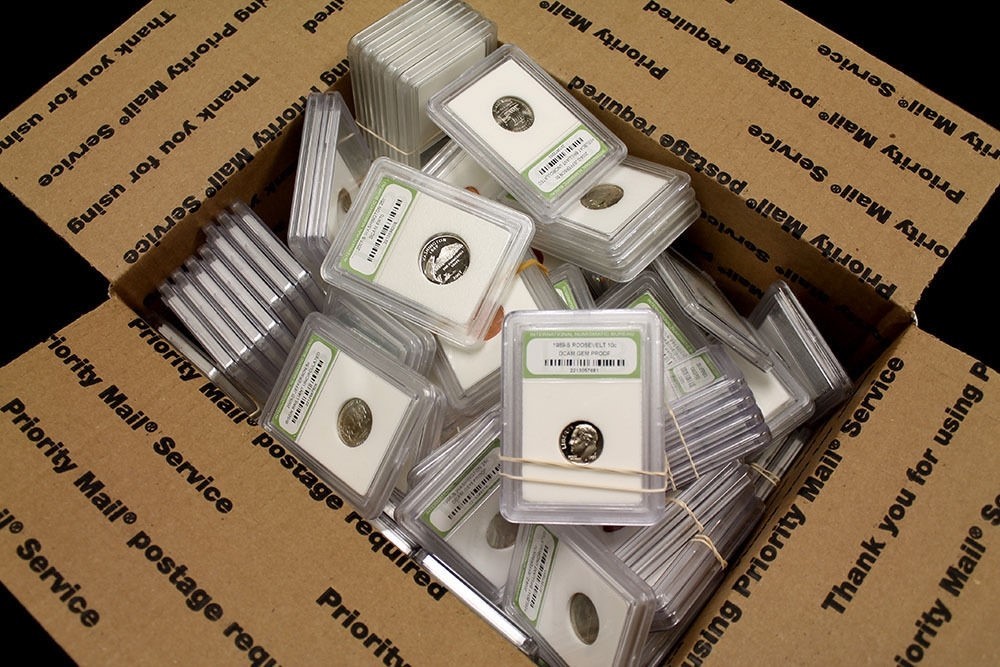
Listing a coin with a recognized, high-grade slab immediately filters the buyer pool to serious collectors willing to pay the certified premium. The single most effective element in a listing is a clear, high-resolution photo of the *entire slab*, showing the certification numbers and the company logo prominently. Stating the specific grading service and grade (e.g., "NGC MS-67") in the title and description eliminates ambiguity and validates the asking price instantly.
On eBay right now
Current asking prices from live listings — not sold-comp medians.



eBay links are affiliate links: JunkPal may earn a commission at no cost to you.