What does “slab classification” mean?
What it means
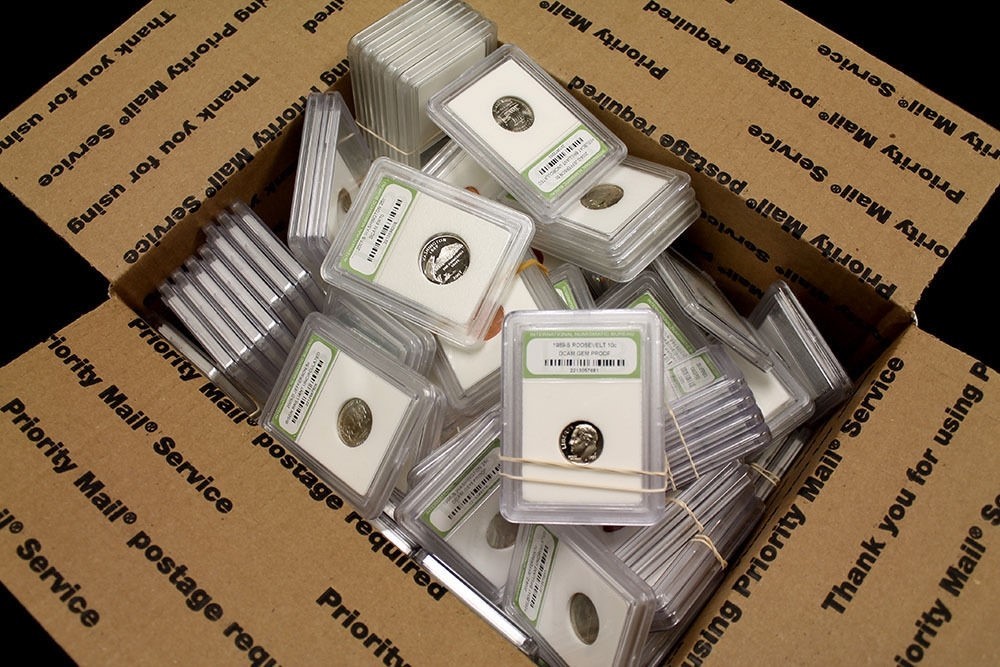
Slab classification is the process where a recognized third-party grading service (e.g., PCGS, NGC) assesses a coin's condition and places it in a sealed, tamper-evident plastic holder, or "slab." The service assigns a numerical grade, which is a standardized, objective measure of the coin's preservation—from Mint State (MS) to heavily circulated (G). This numerical grade replaces subjective opinion. The slab itself is the verification mechanism; it guarantees the coin's stated grade has been authenticated by the grading company.
What it does to price
The grade is the primary driver of value. A professionally graded coin typically commands a premium ranging from 1.5x to 5x the price of the same coin loose (ungraded), depending on the rarity and the grade achieved. A coin graded MS-65 will sell for significantly more than an identical coin graded MS-60. High-grade coins (e.g., MS-67 and above) see exponential value increases. Conversely, a coin with a low grade (e.g., AU-50) may fetch less than 50% of the value of a comparable, higher-graded specimen. For instance, a common silver dollar might sell for $20 loose, but if graded MS-65, it could easily reach $100-$150.
How to spot it
Authentic slabs feature unique, serialized labels affixed by the grading company. The label must match the coin's visible features. Common issues include "re-slabbing," where an old, low-grade coin is placed into a new, high-grade holder. Look closely at the slab’s seal integrity. Sellers sometimes photograph the coin *before* grading; these photos are useful for comparison. A common mistake is confusing the *grade* (e.g., MS-63) with the *slab type* (e.g., a specific protective holder). Always confirm the grading service logo matches the label.
Buying smart
Paying a premium for a slab is justified when the coin is rare, high-demand, or when the grade is necessary to meet a specific collection standard. If the coin is common or the grade difference between two comparable examples is marginal (e.g., MS-62 vs. MS-63), the premium may not be worth the cost. A fair deal involves the premium being proportional to the grade jump. If a seller is asking for a massive premium for a low-grade slab, the coin is likely overpriced or the grading is questionable.
Selling smart
Presenting a coin in a slab is the single most effective way to maximize sale price. The slab acts as instant third-party validation, which removes buyer hesitation and reduces negotiation room. When listing, the grade number and the grading company (e.g., "NGC MS-65") must be prominently featured. The slab itself is the premium feature; a photo clearly showing the certified slab is worth more than several descriptive paragraphs about the coin's condition.
On eBay right now
Current asking prices from live listings — not sold-comp medians.



eBay links are affiliate links: JunkPal may earn a commission at no cost to you.