What does “slab certification” mean?
What it means
Slab certification is the process where a recognized, independent grading service—like PCGS or NGC—inspects a coin. They assign a numerical grade (e.g., MS-65, AU-58) reflecting its physical condition, from Poor to Mint State. The coin is then sealed in a tamper-evident plastic holder, or "slab," which displays the grade and certification number. This process serves as a standardized, verifiable guarantee of both authenticity (it is real) and condition (it matches the assigned grade). For the market, this replaces subjective opinion with objective data.
What it does to price
Slab certification provides a direct, quantifiable increase in market value. The premium varies heavily by coin rarity and grade, but generally, a high-grade slabbed coin can fetch 2x to 10x the price of the same coin uncertified, depending on the coin's inherent desirability. A coin graded MS-65 will command significantly more than an equivalent coin graded AU-50. For example, a common silver coin might sell for $50 loose, but the same coin graded MS-67 by PCGS could easily sell for $250 or more due to the grade guarantee. Low-grade slabs (e.g., G-4) offer minimal premium over loose, while top-tier grades (MS-69+) command the highest premiums.
How to spot it
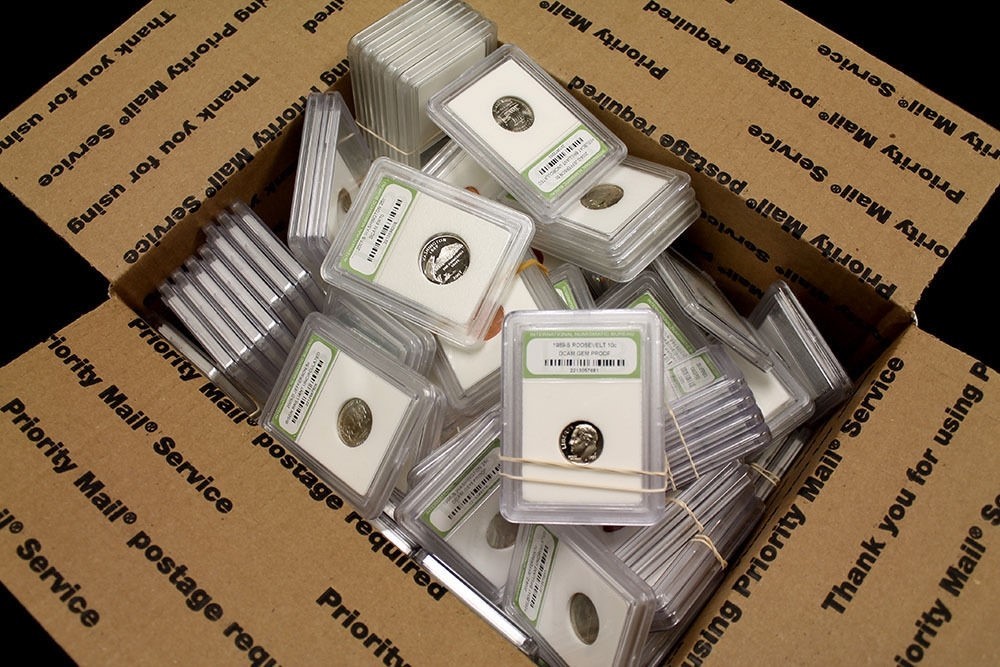
The tell is the official, sealed plastic holder. It will feature the grading company’s logo, the certification number, and the assigned grade clearly visible. Sellers should provide high-resolution photos of the slab's label, not just the coin itself. Common issues include "re-slabbing," where a coin is removed from an original slab and placed into a new one, which is a fraud. Another mistake is misrepresenting the grade; sellers sometimes list a coin as MS-65 when the slab clearly reads MS-63. Always verify the certification number on the holder matches the details provided in the listing description.
Buying smart
Paying the premium for a slab is justified when the coin is rare, highly sought after, or when the grade is critical to the coin's value tier. If a coin is common and the difference between a slabbed and loose version is less than 1.5x the loose price, the premium may not be worth the added cost. A fair deal involves the slab grade accurately reflecting the coin's visual appearance, and the price reflecting the market rate for that *specific* grade, not just the coin itself. If the asking price is drastically higher than comparable graded examples, caution is warranted.
Selling smart
Displaying the slab is the single most effective way to maximize sale price. The certification number and grade act as instant credibility markers, immediately filtering out low-ball offers and attracting serious, high-value buyers. In a listing, the primary photo must clearly show the slab's grade label. Using the term "PCGS Graded MS-65" is more effective than simply stating "Mint Condition." This specificity allows buyers to instantly benchmark the coin against established market data, justifying the higher asking price.
On eBay right now
Current asking prices from live listings — not sold-comp medians.




eBay links are affiliate links: JunkPal may earn a commission at no cost to you.