¿Qué es un autógrafo?
Lo que significa
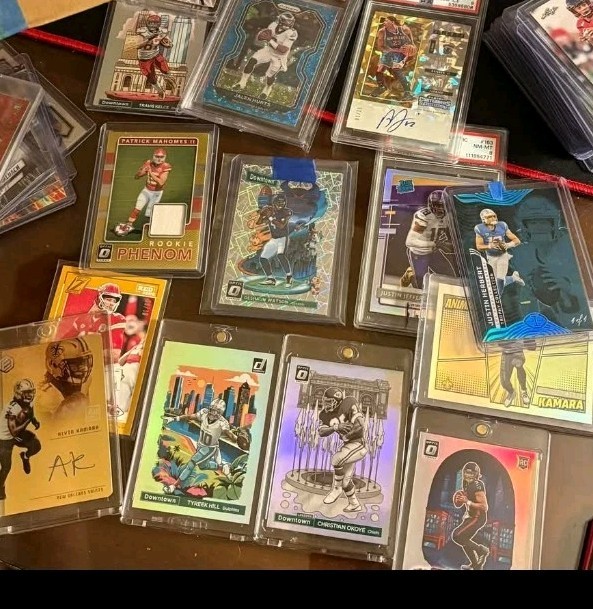
Un autógrafo es una marca, firma o inscripción manuscrita aplicada por una figura pública reconocida —deportista, celebridad, etc.— directamente sobre una tarjeta coleccionable. En este nicho, no es meramente una firma; es una pieza de procedencia directa. El equivalente general es simplemente "artículo firmado". El valor está ligado directamente a la fama de la figura, la claridad de la firma y la condición de la carta. Una firma en una carta de alta demanda es fundamentalmente diferente de una firma en una carta común y de bajo valor.
Cómo afecta el precio
Los autógrafos actúan como un multiplicador de valor significativo. Una carta común, sin graduar y sin autógrafo, podría venderse por \$1.00. La misma carta, si lleva un autógrafo claro y verificable de un jugador de primer nivel, puede fácilmente alcanzar 3x a 10x ese precio, pudiendo llegar a \$3.00 a \$10.00 o más, dependiendo de la escasez base de la carta. Una firma mal ejecutada, tenue o borrosa puede anular el aumento de valor, reduciendo a veces la prima a menos de 1.5x. Por el contrario, una firma genuina en una carta con escasez extrema (por ejemplo, una rookie card de un Hall of Famer) puede resultar en ganancias exponenciales, superando a menudo 50x el valor base.
Cómo detectarlo
La autenticidad requiere escrutinio. Examine el flujo de la tinta; las firmas genuinas a menudo muestran ligeras variaciones en la presión y el grosor de la línea que son difíciles de replicar perfectamente para las impresoras modernas. Busque signos de manipulación alrededor del área de la firma. Los vendedores deben proporcionar fotos de alta resolución que muestren la firma en contexto con los bordes y esquinas de la carta. Las falsificaciones comunes involucran superposiciones digitales o "stickers de autógrafo" aplicados a la superficie de la carta. Los errores honestos incluyen firmas que traspasan el papel de la carta o que se aplican sobre un elemento impreso, lo que reduce el atractivo.
Comprar inteligentemente
Pagar una prima por un autógrafo está justificado cuando la carta en sí tiene un valor base sólido (por ejemplo, una rookie card o un paralelo de tirada corta) y la firma es de una leyenda activa, deseable o fallecida. Si la carta es común, la firma debe ser de una figura de élite, de "blue-chip", para justificar el costo adicional. Evite pagar el precio máximo por un autógrafo en una carta común y de baja calidad. Un trato justo implica que el aumento de precio sea proporcional a la rareza verificable de la firma y al atractivo inherente de la carta.
Vender inteligentemente
Poner a la venta un autógrafo requiere establecer confianza inmediata. El elemento más efectivo en una publicación es proporcionar una foto clara y de primer plano de la firma *y* el certificado de autenticación de terceros correspondiente (por ejemplo, PSA/JSA/Beckett). Si el artículo está graduado y autenticado, la prima que los compradores están dispuestos a pagar a menudo está integrada en la calificación misma, pero declarar explícitamente "PSA Authenticated" en el título genera una tasa de clics y un punto de precio inmediato más altos que simplemente decir "Signed".
On eBay right now
Current asking prices from live listings — not sold-comp medians.





eBay links are affiliate links: JunkPal may earn a commission at no cost to you.
Resale values related to autógrafo
Shop autógrafo on eBay ↗






JunkPal may earn a commission when you buy through eBay links, at no extra cost to you.
What’s worth the most
Ranked on medians of real closed eBay sales, not asking prices.