What does “toy grails” mean?
What it means
"Toy grails" refers to the absolute peak items within a specific toy line or collecting niche. These are toys that possess extreme scarcity, undeniable cultural significance, or near-mythical desirability within the collecting community. The term signifies an item that is the ultimate acquisition goal for dedicated collectors. Unlike simply being "rare," a grail item has achieved a status of legendary status, often due to production errors, extremely limited distribution (e.g., convention exclusives), or being a pivotal piece in a franchise's history. The mainstream equivalent is "holy grail" in collecting, signifying the most coveted object.
What it does to price
Grail status applies a significant, non-linear multiplier to base value. A standard, mint-in-box (MIB) version of a highly desirable item might sell for 1.5 to 3 times its original retail price. When an item is confirmed as a true grail—e.g., a first-run prototype or a verified error piece—the multiplier can easily exceed 5x to 10x. Condition is paramount; a CIB (Complete In Box) grail commands the highest premium. For example, a common, sealed vintage action figure might sell for $50. If that same figure is confirmed as a factory error variant and is recognized as a grail, its value could jump to $1,500 or more.
How to spot it
Identifying a grail requires deep knowledge of the specific toy line. Look for production codes, specific paint applications, or unique packaging variations that indicate limited runs. Sellers must provide high-resolution photos of all identifying marks. Common red flags include vague descriptions ("old toy") or refusal to provide close-ups of the box seams or internal stickers. Fakes are common in high-value lines; always cross-reference known authentic production samples. If the seller cannot provide provenance or clear evidence of the item's unique status, treat it as a high-end collectible, not a verified grail.
Buying smart
Paying a premium for a grail is justifiable only when the item is verifiably authentic and its rarity is documented within established collecting circles. If the item is merely "old" or "nice," the premium is unjustified. A fair deal involves a price that is significantly below the established high-end auction results for similar, authenticated pieces. If the seller is asking for a price that is 20% higher than the highest recent verified sale, the deal is likely inflated, even if the item is genuine.
Selling smart
Proving the grail status in the listing dictates the ceiling of the sale price. The listing must explicitly state the item's unique identifier (e.g., "Error Variant," "Convention Exclusive," "Prototype Sample"). The single most effective element is a clear, well-lit photo of the specific identifying marker—be it a serial number, a unique print, or a specific box flaw. Using the term "Grail" in the title, backed by photographic proof, signals to specialized buyers that the item meets the highest criteria, allowing the seller to command the top-tier valuation.
On eBay right now
Current asking prices from live listings — not sold-comp medians.


eBay links are affiliate links: JunkPal may earn a commission at no cost to you.
Resale values related to toy grails
Shop toy grails on eBay ↗![Bane Dia De Los DC [GITD] #412 (Heroes)](https://storage.googleapis.com/images.pricecharting.com/f6uanb725ra7wcq6/240.jpg)
![Ken Griffey Jr. [100] #24 (Mlb)](https://storage.googleapis.com/images.pricecharting.com/jdd5qleer3gx5jhk/240.jpg)
![Universal Monsters 4 Pack [Metallic] (Movies)](https://storage.googleapis.com/images.pricecharting.com/ezigjzujebekrq5e/240.jpg)
![Huckleberry Hound [Orange] #15 (Animation)](https://storage.googleapis.com/images.pricecharting.com/ames3c5ji3jf5cts/240.jpg)
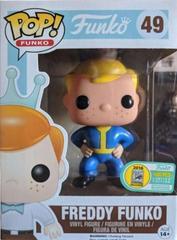
![Huckleberry Hound [Purple] #15 (Animation)](https://storage.googleapis.com/images.pricecharting.com/xfdft667pk6d2wqf/240.jpg)
![Batman [Patina] #19 (Heroes)](https://storage.googleapis.com/images.pricecharting.com/efuydzniwzoti2id/240.jpg)

JunkPal may earn a commission when you buy through eBay links, at no extra cost to you.
What’s worth the most
Ranked on medians of real closed eBay sales, not asking prices.