What does “card crease” mean?
What it means
Card crease refers to any visible linear deformation on the card backing or the card surface itself. This includes folds, bends, or sharp indentations that break the flat plane of the card. While the short definition mentions the backing, creases most critically affect the card front and edges. In the collecting niche, a crease is a form of structural damage, not just cosmetic wear. The mainstream equivalent is "bending" or "folding damage." Minor, hairline creases are distinct from major, sharp folds. The severity dictates the impact on grading.
What it does to price
Creases directly reduce market value. A mint, uncreased copy can command a premium of 3x to 10x over a copy with noticeable creasing, depending on rarity. A card with one faint, barely visible crease might sustain a 10-20% price reduction compared to pristine. A card with a sharp, visible crease across the main artwork area can see a 40-60% drop in value. For example, a common card valued at \$5 loose might drop to \$2-\$3 if it has a distinct crease visible under light. Grading services penalize creases heavily; a crease often prevents a card from achieving a Gem Mint (PSA 10) grade entirely.
How to spot it
Creases are easiest to spot when the card is held up to a strong light source, as the shadow cast by the fold becomes visible. Inspect the edges first, as corner dings often accompany minor creases. For high-value items, request multiple high-resolution photos taken in bright, diffuse light, ideally showing the card flat on a white surface. Common honest mistakes include cards being stacked under heavy weight or being roughly handled during packaging. Fakes are rare regarding creases, as they are physical damage, but sellers might attempt to hide minor creases by angling the photo poorly.
Buying smart
Paying a premium for a card with a noticeable crease is only justified if the card is an ultra-rare, high-demand centerpiece, and the crease is extremely minor (hairline only). For mid-tier or common cards, a crease signals unnecessary risk; the discount offered by the damage should be factored into the purchase price. A fair deal for a card with a minor crease is one where the asking price is at least 25% below the established price for a comparable, uncreased copy. If the crease is significant, the deal is poor unless the card is otherwise flawless.
Selling smart
Transparency regarding creases maximizes the final sale price. Listing the card as "Near Mint with minor creasing" is better than listing it as "Mint" and having the buyer dispute the condition. The single most effective element in a listing is a clear, well-lit photo that specifically highlights the crease area. Labeling the damage (e.g., "Light crease visible on upper left quadrant") manages buyer expectations immediately. This honesty prevents returns and allows the seller to capture the value associated with a lower, but still firm, grade rather than fighting over condition claims.
On eBay right now
Current asking prices from live listings — not sold-comp medians.




eBay links are affiliate links: JunkPal may earn a commission at no cost to you.
Resale values related to card crease
Shop card crease on eBay ↗![Superman [NYCC] #7 (Heroes)](https://storage.googleapis.com/images.pricecharting.com/y6y54wdnsavjfaik/240.jpg)
![The Catman [GITD] #7 (Rocks)](https://storage.googleapis.com/images.pricecharting.com/4aez4z66v2lgfupn/240.jpg)
![Whitebeard [MEFCC Chase] #1270 (Animation)](https://storage.googleapis.com/images.pricecharting.com/vo2zwon6en5xmovo/240.jpg)
![Jax Teller Reaper Crew [SDCC] #112 (Television)](https://storage.googleapis.com/images.pricecharting.com/h7uszxqwpti46vln/240.jpg)
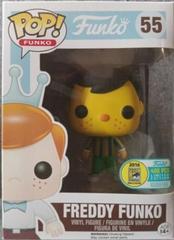
![Freddy Funko [Red Ranger] #SE (Freddy Funko)](https://storage.googleapis.com/images.pricecharting.com/jgcs4yd5aj4jbeik/240.jpg)
![Freddy Funko [SDCC Blue Ranger] #SE (Freddy Funko)](https://storage.googleapis.com/images.pricecharting.com/rzfe2c2kkvudftqr/240.jpg)

JunkPal may earn a commission when you buy through eBay links, at no extra cost to you.
What’s worth the most
Ranked on medians of real closed eBay sales, not asking prices.