What does “tamco” mean?
What it means
Tamco refers to Tamco Corporation, a defunct Japanese video game publisher. In the collecting niche, identifying a game as a Tamco release signifies a specific, often niche, regional origin. These releases are typically associated with the Japanese market and represent smaller, less mainstream publishing efforts compared to giants like Nintendo or Sega. The term functions as a regional and historical marker, indicating a specific era of Japanese third-party or smaller-scale development. It is not a genre or a specific hardware platform, but a label identifying the originating company.
What it does to price
Tamco releases generally carry a rarity premium over mass-market titles from the same era, provided the game is not extremely common. A loose, good-condition cartridge from a lesser-known Tamco title can fetch 1.2x to 2.5x the price of a comparable, widely released title. High-grade, complete-in-box (CIB) copies of sought-after Tamco titles can see multipliers reaching 3x or more, depending on the game's perceived scarcity within the Japanese import scene. Conversely, common, poorly preserved Tamco releases sell at a discount, often 20-30% below comparable mainstream titles due to lower demand.
How to spot it
The primary way to confirm a Tamco release is by examining the copyright or publishing information printed on the cartridge label or the accompanying box art. Look for the Tamco logo or the company name listed in the production credits. Since these are Japanese imports, verifying the region code (usually marked on the cartridge tag or manual) is crucial; most will be marked for Japan (JP). Common honest mistakes involve confusing Tamco releases with later re-releases or bootlegs; always cross-reference the game's title and artwork against known Japanese database entries.
Buying smart
Paying a premium for a Tamco title is justified when the game is known to be a cult classic, has significant historical documentation, or is one of the few known releases of a specific niche title. If the game is obscure and the market has little data on its value, the premium risk is high. A fair deal involves paying a price that reflects the documented rarity, not just the perceived coolness factor. For example, if a similar, documented Tamco title sold recently for $50 loose, a similar one should not be offered for $150 unless its condition is near-mint.
Selling smart
Listing a Tamco title requires specific language to attract the correct buyer. Simply listing it as "Japanese Import" is insufficient. The listing must explicitly state "Tamco Release" and specify the region (JP). This precise identification immediately filters the audience to knowledgeable collectors willing to pay for niche labels. The single most valuable piece of evidence in a listing is a clear, high-resolution photograph of the copyright/publisher stamp on the cartridge itself. This visual proof validates the origin and justifies the premium pricing.
On eBay right now
Current asking prices from live listings — not sold-comp medians.


eBay links are affiliate links: JunkPal may earn a commission at no cost to you.
Resale values related to tamco
Shop tamco on eBay ↗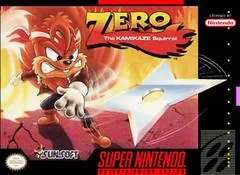
![Diddy Kong Racing [Not for Resale]](/api/images/junkpal-products/games/diddy-kong-racing-not-for-resale-nintendo-64-price/img0/thumb.webp)
![Pokemon Snap [Demo Only] [Not for Resale]](/api/images/junkpal-products/games/pokemon-snap-demo-only-not-for-resale-nintendo-64-price/img0/thumb.webp)
![Turok Rage Wars [Gray]](/api/images/junkpal-products/games/turok-rage-wars-gray-nintendo-64-price/img0/thumb.webp)
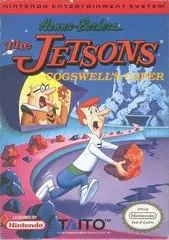
![Analogue Super Nt [Transparent]](/api/images/junkpal-products/games/analogue-super-nt-transparent-super-nintendo-price/img0/thumb.webp)

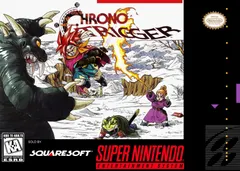
JunkPal may earn a commission when you buy through eBay links, at no extra cost to you.
What’s worth the most
Ranked on medians of real closed eBay sales, not asking prices.