What does “region specific” mean?
What it means
"Region specific" refers to products—video games, consoles, or accessories—manufactured or licensed for a particular geographical market. This concept is the niche equivalent of "market lock." The region dictates several factors: language localization (e.g., English vs. French), electrical compatibility (voltage/plug type), and, critically, software functionality. A product marked for North America (NA) may not function with European (EU) hardware or vice versa, even if the core game is the same. This is not merely about packaging; it is about hardware and software integrity. The primary distinction is the inability to transfer ownership or function across borders without specialized hardware modification.
What it does to price
Region specificity creates distinct pricing tiers. A highly desirable, scarce region variant can command a significant premium. For example, a limited edition Japanese (JP) version of a collector's console accessory might fetch 2x to 4x the price of its standard NA counterpart due to scarcity and collector demand for specific regional aesthetics or inclusions. Conversely, an unwanted region (e.g., an obscure PAL version of a console in a market dominated by NTSC) can depress the price by 20-30% unless a niche buyer is identified. A common mistake is listing a region-locked item as universal; this immediately lowers perceived value.
How to spot it
Region codes are visible in several places. Check the physical console or peripheral for a small sticker or etching, often near the serial number. Game cases will feature region codes (e.g., CUSA for NA, PAL/SEC for EU, JPN for Japan) printed on the back or inside the manual. For digital items, the region is tied to the account/server. Common mistakes involve sellers failing to photograph the region code, leading buyers to assume universal compatibility. Fakes are less common for region codes, but mislabeling is frequent—a seller might claim NA when the box clearly shows EU markings.
Buying smart
Paying a premium for region specificity is justified when the variant itself is rare, highly desirable to a specific collector demographic, or if the regional content offers unique value (e.g., exclusive characters or localized story modes). It is not worth the premium if the region is functionally irrelevant to the intended use or if the difference is purely cosmetic and easily replicated. A fair deal involves the price reflecting the scarcity of that specific regional run, not just the general condition of the item. If the region is a minor variant (e.g., a different manual cover), the premium should be minimal.
Selling smart
Proving the region is the single most effective way to anchor a high-value listing. Buyers pay a premium for certainty. The listing must clearly state the region code (e.g., "NA Version," "EU PAL"). The one photo that earns the premium is a clear, close-up shot of the region code printed on the packaging or the device itself. Using the specific region code in the title (e.g., "PS4 - JP Limited Edition") immediately filters the audience to those willing to pay the higher price for that specific market variant.
On eBay right now
Current asking prices from live listings — not sold-comp medians.


eBay links are affiliate links: JunkPal may earn a commission at no cost to you.
Resale values related to region specific
Shop region specific on eBay ↗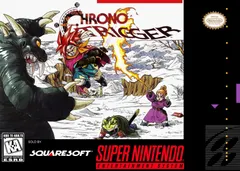
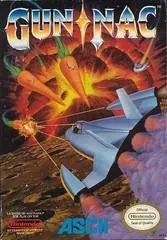
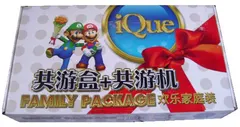
![Gyromite [ROB Bundle]](/api/images/junkpal-products/games/gyromite-rob-bundle-nes-price/img0/thumb.webp)

![Analogue Pocket [Natural Anodized]](/api/images/junkpal-products/games/analogue-pocket-natural-anodized-gameboy-price/img0/thumb.webp)


JunkPal may earn a commission when you buy through eBay links, at no extra cost to you.
What’s worth the most
Ranked on medians of real closed eBay sales, not asking prices.