What does “niche market” mean?
What it means
A niche market is a highly specialized subset of the video game collecting sphere. It moves beyond AAA blockbusters and mainstream console titles. Instead, a niche targets specific criteria: obscure hardware (e.g., specific handhelds, early PC peripherals), hyper-specific genres (e.g., Japanese puzzle games from the PS1 era), or extremely limited production runs. The mainstream equivalent is "specialty collecting." The value proposition is deep expertise over broad inventory.
What it does to price
Niche items exhibit price volatility driven almost entirely by scarcity and dedicated demand, not mass appeal. A common, highly sought-after niche title might fetch 4x to 10x the price of its common counterpart, depending on condition and verified scarcity. A common example: a standard NES game might sell for $50 loose; a verified, extremely limited regional variant of that same game could easily command $800+. Condition is critical; a CIB (Complete In Box) copy in a niche is often worth 2x to 4x more than a loose copy because the packaging itself is part of the collectible narrative.
How to spot it
Spotting a niche requires looking past the title and focusing on metadata. Look for edition markers (e.g., "Limited Run," specific manufacturing codes on the cartridge label, regional lock indicators). If a game is obscure, ask for high-resolution photos of the box back, instruction manual text, and the physical cartridge shell itself. Common pitfalls include misidentifying regional variants as standard releases or accepting "factory sealed" claims without verifiable proof, as counterfeits are common in highly sought-after, low-volume areas.
Buying smart
Paying a premium is justified when the item is verifiable and the niche has established, passionate buyers. If the item is a known, verified rarity within a community (e.g., a specific developer's prototype release), the premium is warranted. Avoid overpaying when the scarcity claim is anecdotal or unverified. A fair deal means the asking price is within 20-30% of established community benchmarks for that specific, documented variant. If the seller cannot provide clear documentation of the item's rarity, the premium is speculative risk.
Selling smart
Proving the item belongs to a recognized niche drastically increases perceived value. Generic listings attract lowball offers. A listing that explicitly states, "Japanese PAL release, 1994 limited print run, verified by [Specific Collector Forum]," immediately filters the audience toward serious, high-budget buyers. The single most effective element is providing a clear, close-up photo of the edition marker or unique serial number. This shifts the item from a "game" to a "documented artifact," commanding the highest tier of collector pricing.
On eBay right now
Current asking prices from live listings — not sold-comp medians.


eBay links are affiliate links: JunkPal may earn a commission at no cost to you.
Resale values related to niche market
Shop niche market on eBay ↗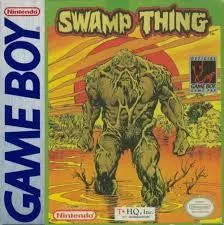
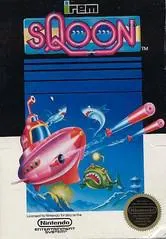


![Pesterminator [Black]](/api/images/junkpal-products/games/pesterminator-black-nes-price/img0/thumb.webp)
![Nintendo World Championship [25th Anniversary]](/api/images/junkpal-products/games/nintendo-world-championship-25th-anniversary-nes-price/img0/thumb.webp)


JunkPal may earn a commission when you buy through eBay links, at no extra cost to you.
What’s worth the most
Ranked on medians of real closed eBay sales, not asking prices.