What does “speculation” mean?
What it means
Speculation in comics is the practice of acquiring or divesting a comic based on projected future market appreciation rather than its intrinsic value as a collectible or reading material. It is an investment strategy, not a hobby pursuit. The core belief is that external factors—such as a character's cultural relevance spiking, a creator achieving legendary status, or a general collector frenzy—will drive the price upward beyond current market averages. This is distinct from "investment collecting," which focuses on proven historical scarcity; speculation is forward-looking risk assessment.
What it does to price
Speculative value acts as a premium multiplier on the base market price. A common example is a key issue tied to a major crossover event. A standard, graded copy might sell for \$500. If the market anticipates a massive surge due to an upcoming film adaptation, a comparable copy with clear provenance might command \$1,200 to \$2,500, representing a 2.4x to 5x multiplier. Price inflation due to speculation is volatile; a predicted surge can evaporate if the anticipated event fails to materialize or if market sentiment shifts.
How to spot it
Speculation is often attached to specific print runs or first appearances. Look for titles with low print runs or those featuring creators known for high market volatility (e.g., specific Golden Age artists or modern "hot" writers). Sellers pushing speculative value often use hyperbole in descriptions ("Guaranteed Moonshot," "Next Big Thing"). To verify, request high-resolution scans of the interior pages, specifically checking for printing anomalies or misprints that might indicate a limited, sought-after variant, rather than just hype.
Buying smart
Paying a speculative premium is justifiable when the underlying catalyst is concrete and verifiable. This includes confirmed, high-profile media tie-ins (e.g., a major Netflix series adaptation) or when a creator's career trajectory has demonstrably peaked, signaling scarcity. It is not worth the premium based solely on "hype" or vague future potential. A fair speculative deal requires the asking price to be anchored to a documented, near-term catalyst, not a distant, unconfirmed possibility.
Selling smart
When selling a speculative piece, the listing must explicitly frame the item as an investment opportunity, not just a comic. The key differentiator is providing context. A listing should include a brief, factual statement detailing *why* the item is speculative (e.g., "Key issue tied to [Character] debut, high potential due to recent media interest"). The single most effective addition is a comparison to a comparable, recently sold speculative piece, even if the sale was years prior, to anchor the perceived value in past market behavior.
On eBay right now
Current asking prices from live listings — not sold-comp medians.


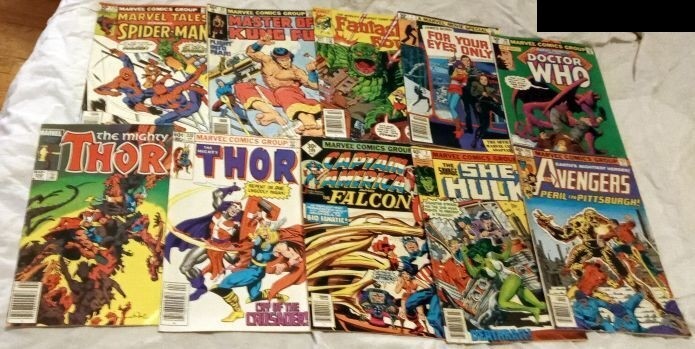


eBay links are affiliate links: JunkPal may earn a commission at no cost to you.