What does “print density” mean?
What it means
Print density is the saturation and darkness of the ink applied to the comic book paper. It is the visual measure of how rich the blacks are and how vibrant the colors appear. High print density means the ink is solid, deep, and consistent across all panels and pages. Low print density indicates ink washout, fading, or uneven application, which is a manufacturing defect or a sign of poor storage. This is not merely about color; it relates to the quality of the printing process itself. In grading, it is a component of the "Visual Quality" assessment, directly impacting the book's aesthetic grade.
What it does to price
Print density acts as a consistent quality modifier. A comic with uniformly high print density commands a premium, often translating to a 15-30% increase over an otherwise identical copy with moderate density. Poor density—where blacks look gray or colors appear washed out—can cause a noticeable devaluation, sometimes dropping the perceived grade by a half-letter (e.g., from VF to VG), resulting in a price reduction of $10 to $40 depending on the book's base value. For a mid-tier book worth $100, poor density might push the sale price toward $75.
How to spot it
Inspection requires bright, direct light. Look closely at solid black areas—they should be opaque, not translucent. Check the edges of ink lines; bleed or feathering indicates low density or poor ink quality. For high-value books, request high-resolution scans of interior pages, not just the cover. Common issues include "dot gain," where the printing dots merge slightly, which can look like density loss. Genuine print quality issues are inherent to the printing run; fakes related to density are rare unless the book has been poorly restored or reprinted.
Buying smart
Paying a premium for high print density is worthwhile when the book is a key piece of a high-grade set, or when the book's base value is already substantial (over $200). If the book is a common, low-value item, the marginal cost of achieving perfect density is rarely worth the small price increase. A fair deal involves a price that reflects the *consistent* quality across the entire run. If a seller claims high density but the photos show significant fading on interior pages, the premium is not justified.
Selling smart
Proving high print density in a listing directly supports a higher asking price. The most effective evidence is a close-up photo of a solid black panel, taken in natural, bright light, showing crisp, deep ink. A simple declaration like "Excellent, deep ink saturation" is weak; a visual proof of density is strong. Highlighting this detail allows the seller to anchor the book in the higher end of the condition spectrum, justifying a higher sale price against comparable listings.
On eBay right now
Current asking prices from live listings — not sold-comp medians.

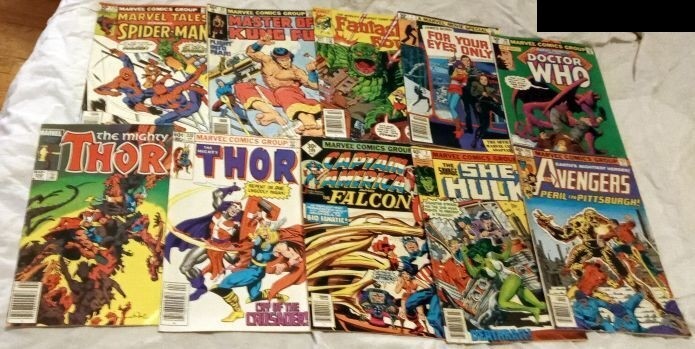


eBay links are affiliate links: JunkPal may earn a commission at no cost to you.