What does “late print” mean?
What it means
"Late print" refers to a subsequent printing or run of a comic book issue after the initial release. This is distinct from a standard reprint, which is a complete re-release years later. A late print is a continuation of the original production run, often occurring months after the first printing. The primary difference lies in manufacturing tolerances. Later runs frequently exhibit minor variations: paper stock degradation, slight shifts in ink density, or subtle changes in cover printing registration compared to the very first copies. For collectors, the first print is the baseline standard; subsequent runs are variations on that standard.
What it does to price
Generally, a late print carries a lower market value than the first print of the same issue, assuming all other factors (condition, grade) are equal. The price difference is not always linear. If the late print is simply a standard, unnoted continuation, it can fetch 20-40% less than the first print. However, if the late print introduces a known, desirable variant cover or a specific content correction, the value can stabilize or even increase, sometimes matching the first print's value. For example, a standard late print might sell for $15 loose, whereas the first print might sell for $25 loose. A late print with a known, desirable variant cover could command $35 or more.
How to spot it
Identifying a late print requires close inspection. The most reliable indicators are publisher release notes or established grading guides that document production changes. Physically, look for subtle shifts in paper color (sometimes slightly yellower) or variations in the spot gloss or ink saturation on the cover. If the issue has a specific edition marker, note if it matches the initial run's documentation. Sellers should provide high-resolution photos of the spine and the interior pages, allowing for examination of paper texture and ink consistency. Mistaking a genuine late print for a later, unauthorized reprint is a common error; always verify the production date against known release schedules.
Buying smart
Paying a premium for a late print is only justified when the print run itself is documented as a desirable variant. If the issue is otherwise standard, purchasing a late print when a first print is available is financially unsound. A fair deal for a standard late print should reflect its secondary status—if the first print is listed at $50, a standard late print should not exceed $35 unless the condition is superior. If the issue is a high-demand title, the gap between first and late print pricing might narrow, but the first print remains the safer investment.
Selling smart
Listing a comic as a "Late Print" without proper context reduces perceived value. The premium is earned by providing verifiable proof of the print run. The single most effective addition to a listing is a clear, close-up photo of any distinguishing mark, edition stamp, or a comparison shot showing the subtle difference in the cover printing versus the first print's known appearance. Stating clearly, "Standard Late Print Run," manages buyer expectations. If the late print is a known variant, the listing must explicitly state this to justify the higher price point.
On eBay right now
Current asking prices from live listings — not sold-comp medians.


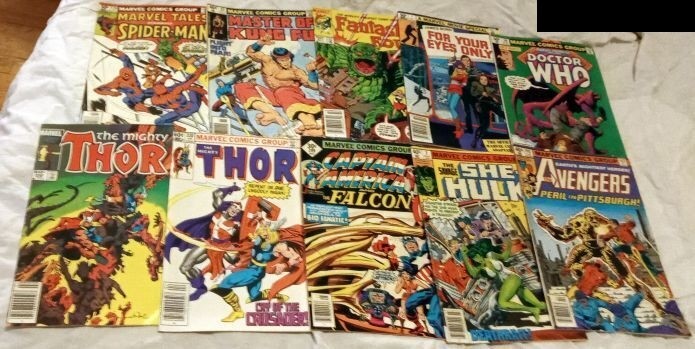


eBay links are affiliate links: JunkPal may earn a commission at no cost to you.