What does “inking quality” mean?
What it means
Inking quality refers to the technical execution of the black ink applied to the comic art. It measures the precision, consistency, and artistic skill evident in the line work. High-quality inking features crisp, clean lines, uniform line weight across the page, and expert rendering of tonal values through hatching or spot blacks. This is the technical equivalent of a painter’s brushwork. Poor inking manifests as "muddy" lines—where ink bleeds or mixes indistinctly—uneven saturation, or visible inconsistencies in line thickness, suggesting rushed or amateur execution. For collectors, this is a direct assessment of the original artist's craft.
What it does to price
Inking quality is a secondary factor to condition (grade) and rarity, but it acts as a significant modifier. A comic with exceptional, museum-quality inking, holding the same grade and rarity as a standard copy, can fetch a premium ranging from 15% to 40% higher in auction environments. Conversely, significant flaws—such as heavy ink bleed-through or inconsistent application across major panels—can depress value by 10% to 25%. For example, a high-grade, sought-after issue with noticeably sloppy inking might sell for $50 less than an identical copy with flawless line work.
How to spot it
Assessment requires close inspection under bright, direct light. Examine the line work in high-contrast areas, particularly shadows and texture applications. Look for "pinching" (where the line weight suddenly thins unnaturally) or "blooming" (where the ink spreads beyond the intended line). Sellers should provide high-resolution, close-up digital scans of key panels, not just general photos. Honest mistakes include accidental ink splatters or smudges on the original art board. Fakes related to inking are rare unless the entire artwork was poorly reproduced or digitally altered post-production.
Buying smart
Paying a premium for inking quality is justified when the comic is otherwise pristine (high grade, low wear) and the inking is clearly the work of a recognized master whose style is highly valued. If the comic is graded low (e.g., C-) or has significant wear, paying extra solely for superior inking is rarely a sound investment. A fair deal means the premium paid for the artwork's technical merit is proportional to the difference in perceived artistic value, not just a small aesthetic preference.
Selling smart
Highlighting superior inking quality in a listing shifts the perception from a "graded book" to a "piece of art." The most effective proof is a dedicated, high-resolution macro photograph focusing solely on a complex, highly inked panel (e.g., a detailed cityscape or character shadow). The single word "Masterfully Inked" or "Exceptional Line Work" used in the description, backed by the photo, can justify the top end of the pricing range for a comparable copy.
On eBay right now
Current asking prices from live listings — not sold-comp medians.

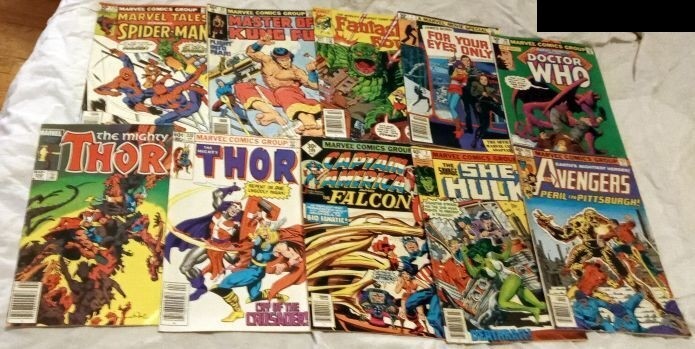


eBay links are affiliate links: JunkPal may earn a commission at no cost to you.