What does “hobby grade” mean?
What it means
"Hobby grade" is a colloquial descriptor used in the secondary market to categorize comic books that are visually sound but exhibit imperfections that fall outside of "Near Mint" or "Very Fine" standards. Unlike professional grading (CGC, CBCS), which assigns a numerical score (e.g., 9.0, 7.5), hobby grading is subjective. It is the reseller's shorthand for "Good condition, but not perfect." Common flaws include minor spine stress, slight tanning of the paper, small pinholes, or light creasing along the edges. It signals to the buyer that the book is readable and displayable but carries inherent wear.
What it does to price
Hobby grade inherently places a book below high-grade listings. The discount is directly proportional to the severity of the visible flaws. A book described as "Hobby Grade" will typically sell for 30% to 60% less than a comparable copy graded in the equivalent high-end numerical range (e.g., a 9.0 equivalent). Minor wear (light corner dings) keeps the book in the upper end of the hobby grade bracket. Significant flaws (tears, heavy spine roll) drop it toward the lower end. For example, a sought-after $100 loose copy might sell for $50 if it has noticeable spine wear, whereas a pristine copy would command $100+.
How to spot it
The tells are physical observation. Look closely at the spine for breaks or heavy creasing. Check the corners for rounding or small nicks. Paper discoloration (tanning) is common in older books and is usually acceptable unless it is severe foxing (brown spots). Sellers must provide clear, high-resolution photos of the front cover, back cover, and the entire spine. A common mistake is labeling a book as "Hobby Grade" when it is actually "Fine" or better; always cross-reference the seller's description with the provided images.
Buying smart
Paying a premium for a "Hobby Grade" copy is only justifiable when the book is otherwise rare, highly desirable, or if the flaws are truly minimal and aesthetic. If the book is common or the flaws are substantial (e.g., multiple tears), the premium is unwarranted. A fair deal means the price reflects the documented flaws. If a seller lists a book as Hobby Grade but the photos show near-perfect condition, the price is inflated.
Selling smart
When listing, accurately defining the condition is crucial for minimizing returns and disputes. Do not use "Hobby Grade" if the book is truly near-mint; use a more precise term like "VF/NM Minus." If using "Hobby Grade," detail the specific flaws in the description (e.g., "Light tanning on interior pages; minor spine roll"). Including a photo that clearly showcases the specific flaw justifies the lower price and manages buyer expectations, leading to faster, cleaner sales.
On eBay right now
Current asking prices from live listings — not sold-comp medians.

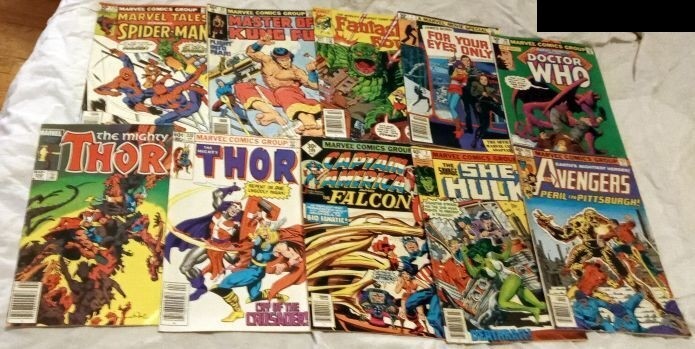


eBay links are affiliate links: JunkPal may earn a commission at no cost to you.