What does “high grade market” mean?
What it means
The high grade market is the segment of the comic book trade focused exclusively on professionally authenticated, top-tier condition copies. Grading services assign numerical scores, usually 0.5 to 10.0, quantifying the comic’s physical state. Common grades range from Near Mint (NM) to Mint (M) or higher. This numerical score is the primary determinant of value in this niche. The mainstream equivalent is "pristine condition," but the grading service provides an objective, standardized metric. The grade reflects preservation quality—creases, color breaks, spine stress, and cover wear are all quantified.
What it does to price
Condition dictates price exponentially. A high-grade copy typically fetches a significant premium over an ungraded or lower-grade copy. For a popular, sought-after title, a certified 9.8 can command 3x to 10x the price of an equivalent 6.0 copy. The difference between a 9.6 and an 8.0 copy can easily translate to a $500 to $2,000+ variance on a mid-tier book, depending on market demand. Factors pushing the price up include perfect centering and sharp corners. Factors pulling it down include minor, unlisted surface flaws or centering issues not perfectly captured by the grade.
How to spot it
Authentication relies on the third-party slab provided by the grading company (CGC, CBCS, etc.). The slab itself is the primary indicator. Sellers must provide clear, high-resolution photos of the entire comic, focusing on the spine, corners, and the front/back cover to verify the grade matches the visual evidence. Common mistakes include mis-grading (where a seller claims a high grade when the slab shows lower) or "grade inflation" (where a book is submitted knowing it is borderline). Fakes are rare for the grading slab itself, but sellers may misrepresent the *actual* condition of the book before it was graded.
Buying smart
Paying a premium for high grade is justified when the comic is a blue-chip investment piece—a key issue, a highly desirable character, or a book with proven long-term scarcity. If the book is a common title or a minor character appearance, the premium often does not yield a proportional return. A fair deal involves comparing the asking price against recent, comparable sales data (comps) for the *exact* grade and edition. If the asking price is more than 20% above established comps for that grade, caution is warranted.
Selling smart
The premium is earned by providing verifiable proof of condition. Listing the comic with its certified slab attached is non-negotiable for maximizing return. The single most valuable element in a listing is the photo of the *slab itself*, clearly showing the grade number and the grading company logo. Furthermore, including a brief, factual description confirming the grade (e.g., "CGC 9.8") removes all ambiguity and immediately targets high-value buyers willing to pay the associated premium.
On eBay right now
Current asking prices from live listings — not sold-comp medians.

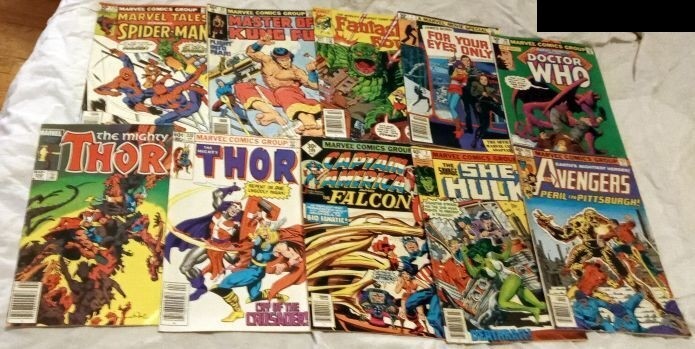


eBay links are affiliate links: JunkPal may earn a commission at no cost to you.