What does “era specific variant” mean?
What it means
An era specific variant is a comic book edition tied to a clearly defined, recognizable period within a series' publishing history. This is not merely a color difference; it denotes a specific production run, creative team tenure, or major narrative arc. The mainstream equivalent is a "period issue," but "era specific variant" emphasizes the *intentional* or *contextual* nature of the variation within that time frame. These variants possess subtle markers—different cover art, specific printing plates, or limited distribution runs—that anchor the book to a particular cultural or editorial moment. The era defines the book's narrative weight.
What it does to price
The era designation acts as a multiplier on base value. A standard issue from a less impactful period might sell for $5-$15 loose. An era specific variant from a highly influential run (e.g., a key character's debut or a major creative shift) can see a multiplier of 2x to 5x over the standard issue, depending on the variant's rarity within that era. For instance, a standard issue might fetch $10, but the corresponding era variant, if scarce, could command $30-$50, provided the condition is comparable. Extreme scarcity within a key era can push premiums significantly higher.
How to spot it
Identification requires cross-referencing the specific issue number against known publication timelines. Tells include subtle differences in the printing ink density, specific letterpress variations on the cover, or unique interior page layouts that only existed for a short run. Sellers must provide high-resolution photos of the spine and the first and last pages. Common errors are mislabeling a standard issue as a variant, or conversely, mistaking a standard reprint from a later, similar era for a true original variant. Always verify the stated variant status against established comic databases for that title.
Buying smart
Paying a premium for an era specific variant is justified when the variant represents a pivotal, critically acclaimed, or historically significant moment in the comic's run. If the variant is a minor aesthetic change with no accompanying narrative importance, the premium is often inflated. A fair deal requires the premium paid for the "era" to be commensurate with the documented historical weight of that specific publishing period. If the variant is only marginally different from the standard issue, the price difference should be minimal.
Selling smart
Proving the variant status in the listing directly dictates the ceiling price. Listing the book as "Era Specific Variant: [Specific Run Name]" immediately filters the audience toward informed collectors willing to pay the necessary premium. The single most effective piece of evidence is a clear, close-up photograph of the distinguishing feature—be it a specific logo placement, a unique cover bleed, or a unique printing plate mark. This visual proof validates the higher asking price instantly.
On eBay right now
Current asking prices from live listings — not sold-comp medians.

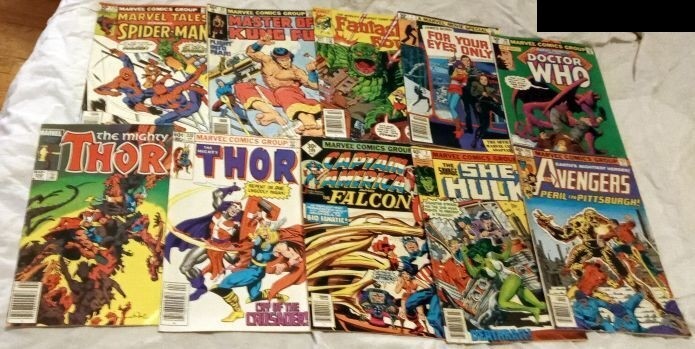


eBay links are affiliate links: JunkPal may earn a commission at no cost to you.