Qu'est-ce que la spéculation ?
Ce que cela signifie
La spéculation dans les comics est la pratique consistant à acquérir ou à se défaire d'un comic en fonction de l'appréciation future projetée du marché, plutôt que de sa valeur intrinsèque en tant que collection ou matériel de lecture. C'est une stratégie d'investissement, pas une simple passion. La croyance fondamentale est que des facteurs externes — comme une augmentation de la pertinence culturelle d'un personnage, l'atteinte d'un statut légendaire par un créateur, ou une frénésie générale des collectionneurs — feront grimper le prix au-delà des moyennes actuelles du marché. Ceci est distinct de la « collection d'investissement », qui se concentre sur la rareté historique prouvée ; la spéculation est une évaluation des risques tournée vers l'avenir.
Quel impact sur les prix
La valeur spéculative agit comme un multiplicateur de prime sur le prix de marché de base. Un exemple courant est un numéro clé lié à un événement crossover majeur. Un exemplaire standard, gradé (graded slab), pourrait se vendre 500 dollars. Si le marché anticipe une augmentation massive en raison d'une adaptation cinématographique à venir, un exemplaire comparable avec une provenance claire pourrait atteindre 1 200 à 2 500 dollars, représentant un multiplicateur de 2,4x à 5x. L'inflation des prix due à la spéculation est volatile ; une hausse prévue peut s'évaporer si l'événement anticipé ne se produit pas ou si le sentiment du marché change.
Comment la repérer
La spéculation est souvent associée à des tirages spécifiques ou à des premières apparitions. Recherchez des titres avec de faibles tirages ou ceux présentant des créateurs connus pour une forte volatilité du marché (par exemple, certains artistes de l'Âge d'Or ou des auteurs modernes « en vogue »). Les vendeurs qui poussent la valeur spéculative utilisent souvent de l'hyperbole dans leurs descriptions (« Moonshot garanti », « La prochaine grande chose »). Pour vérifier, demandez des scans haute résolution des pages intérieures, en vérifiant spécifiquement les anomalies d'impression ou les erreurs qui pourraient indiquer une variante limitée et recherchée, plutôt que de simples battages médiatiques.
Acheter intelligemment
Payer une prime spéculative est justifiable lorsque le catalyseur sous-jacent est concret et vérifiable. Cela inclut des liens médiatiques confirmés et de haut niveau (par exemple, une adaptation majeure sur Netflix) ou lorsque la trajectoire de carrière d'un créateur a atteint un pic démontrable, signalant une rareté. Cela ne vaut pas la prime uniquement sur la base de « battages médiatiques » ou d'un potentiel futur vague. Une affaire spéculative équitable exige que le prix demandé soit ancré à un catalyseur documenté et à court terme, et non à une possibilité lointaine et non confirmée.
Vendre intelligemment
Lors de la vente d'une pièce spéculative, l'annonce doit explicitement présenter l'article comme une opportunité d'investissement, et pas seulement comme un comic. La différence clé est de fournir du contexte. Une annonce doit inclure une déclaration brève et factuelle détaillant *pourquoi* l'article est spéculatif (par exemple, « Numéro clé lié au début de [Personnage], fort potentiel en raison de l'intérêt médiatique récent »). L'ajout le plus efficace est une comparaison avec une pièce spéculative comparable vendue récemment, même si la vente remonte à des années, afin d'ancrer la valeur perçue dans le comportement passé du marché.
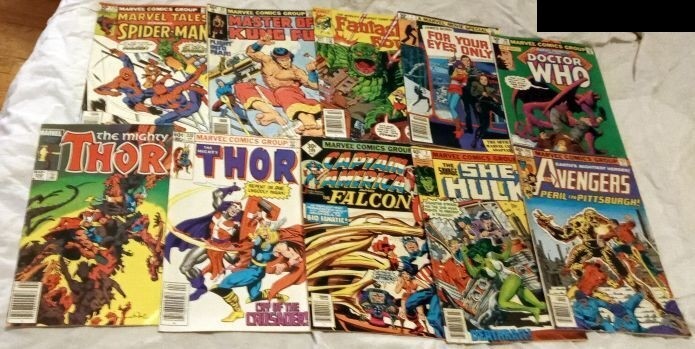
On eBay right now
Current asking prices from live listings — not sold-comp medians.




eBay links are affiliate links: JunkPal may earn a commission at no cost to you.